When you are launching apparel or scaling merchandise, picking the right branding element is a make-or-break choice. Store owners often struggle when choosing branding for hats and jackets without knowing which patch type lasts through wear and laundering. Incorporating custom embroidered patches alongside versatile leather patches gives your catalog a distinct edge. Understanding how production methods affect longevity protects your budget.
Why Brands Are Choosing Leather Patches in 2026
Store owners are moving away from flat printed tags and standard stitching because leather patches instantly communicate high-end value and a boutique aesthetic. Unlike conventional thread embroidery, these rugged hides come with accents that add artisan quality.
- High-End Appeal: Best for use on trucker caps, heavyweight denim jackets, duffle bags, and other fashion accessories.
- The “Logo Tag” Look: Offers new brands with the classic look of a finished logo tag.
- Material Integrity: Genuine and quality faux leathers age gracefully, developing a rich patina over time.
To ensure your backing materials and fabrics are completely compatible with your chosen aesthetic, check out our guide on the best materials used in patch embroidery. Integrating diverse leather patch types makes growing custom leather patch lines unique in highly competitive online stores.
Quick Comparison: Embossed vs Printed vs Debossed
It is important to know the structural difference between various material types to match your artwork to the required production technique.
| Type | Look | Best For | Durability | Relative Cost |
| Embossed | Raised, 3D texture | Hats, jackets, premium bags | High | Medium–High |
| Printed | Flat, full-color detail | Small logos, multi-color art | Medium | Low |
| Debossed | Pressed-in, subtle depth | Minimalist, tone-on-tone branding | High | Medium |
Note: Exact price tiers vary based on order volume, hide selection, and backing options.) Explore our dedicated service pages to look closer at custom leather patches and custom embroidered patches.
What Is an Embossed Leather Patch?
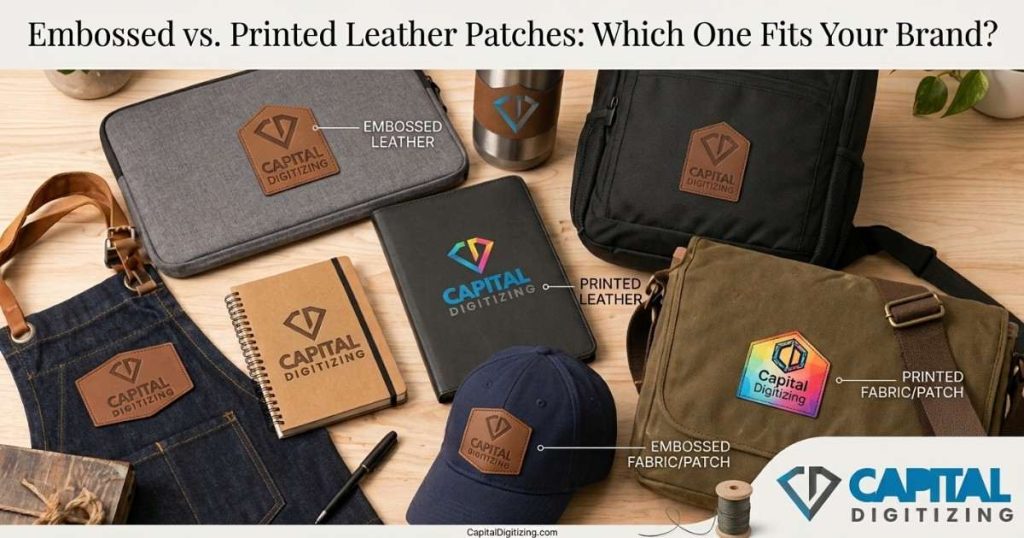
Embossed leather patches are crafted by applying intense heat and heavy mechanical pressure to press your logo upward, creating a distinct, tactile 3D surface. This method works exceptionally well for clean wordmarks, bold vectors, and single-tone artwork.
- Tactile Experience: The bumpy design adds a 3D feel that customers enjoy touching.
- Aging Gracefully: Since the design is made directly on the leather, it keeps its shape and style as the leather gets older and changes.
- Ideal Placement: Often found on snapback hats, sturdy jackets, and tough canvas items, this is a great option for any leather patches for hats.
Verdict: Embossing offers longevity and tactile luxury that ages naturally, and thus is the best technique for durable clothing and caps.
What Is a Printed Leather Patch?
A printed leather patch applies specialized ink directly onto a smooth leather surface without altering its physical depth. This approach bypasses the limitations of traditional carving or molding.
- Full-Color Capability: Can easily copy detailed gradients, colorful logos, and fine photo details that a standard embroidery patch can’t do.
- Cost and Speed: It needs less setup time and can quickly produce more items for big promotions.
- Trade-Offs: The printed surface is strong, but it might fade a little over time if it’s often outside, especially compared to heat-pressed options.
Verdict: Printing offers colorful gradients along with detail work at a reasonable price, but lacks tactile elements.
What Is a Debossed Leather Patch?
A debossed leather patch flips the script on traditional stamping by pressing the artwork into the leather rather than pushing it outward.
- Aesthetic: This creates a clean, recessed shadow effect popular for understated, minimalist, tone-on-tone branding.
- Customizing: Several designers like to color the recessed parts using foils or ink of another color to bring out the logo while retaining the clean sunk edges.
- Care: Maintaining these patches is pretty simple; a quick check in a custom patch care manual will keep your leather products looking soft for years.
Verdict: Debossing provides a discreet and elegant design that ages beautifully and therefore makes perfect understated brand markers.
Embossed vs. Printed: Durability, Cost & Look
| Factor | Embossed | Printed | Custom Embroidered Patches |
| Outdoor durability | High | Medium | High |
| Detail/color range | Low–Medium | High | Medium |
| Cost at scale | Medium–High | Low | Lowest at high volume |
| Texture/feel | Raised, tactile | Flat, smooth | Raised thread texture |
It’s vital to balance good looks with how long they last when planning how to manufacture hide insignia. Embossing is great for being strong and feeling nice, while printing is better for accurate colors and is cheaper for colorful logos. But, for massive bulk runs, traditional stitched embellishments often underbid leather alternatives on a per-unit basis.
Leather Patches vs Custom Embroidered Patches: Which Fits Your Brand?
Choosing between hides or threads can only be done based on the identity of your brand and its target consumer. Leather textures favor a rugged feel and outdoor style, while custom embroidered patches give a vintage texture, collegiate history, and rich thread counts.
- When to choose leather: If you manufacture workwear, outdoor equipment, artisan products, or premium hats.
- When to choose embroidery: If you want dense colors, sports style, or team products.
- The Hybrid Route: An experienced embroidery patch maker can combine merrowed thread borders with a central leather core to give you the best of both worlds. For proper maintenance over time, reference any standard custom patch care guide.
Best Leather Patch for Hats: Embossed or Printed?
Selecting the ideal leather patch for hats requires understanding how hats react to sunlight, sweating, and bending.
- The Shape Factor: Embossed leather patches serve as the benchmark of the leather patch industry for truckers’ caps and snapbacks, as the thick, heat-pressed hide stays rigid in curved panels.
- The Style Factor: Printed patches work wonderfully on flat-brim caps or fashion hats that demand hyper-detailed artwork without added thickness.
- Die Cutting: Matching your patch to curve perfectly with the crown of the cap is just as crucial as the way it’s made.
When dealing with caps, embossing is a more sensible option in terms of durability and safety than printing for everyday use.
Finding the Cheapest Custom Patches Without Losing Quality
Ordering the cheapest custom patches doesn’t mean giving up on the professional quality of your patch. Smart manufacturing strategies allow you to save on your expenses without cutting the quality of your products.
- Volume Scaling: The cost per unit starts dropping considerably when you reach 100 to 250 units.
- Material Selection: The use of printed leather or cheap embroidered patches is less costly in terms of tooling than creating custom metal dies for embossing.
- Stock Tooling: Inquire with your embroidered patch maker if they use standard die shapes (circle, shield, rectangle) to avoid any costs related to custom molds.
- Avoid Ultra-Thin Faux Leather: These materials tend to crack under pressure easily and thus ruin the luxury appeal you want to achieve.
Working with a top company makes sure your designs are the best right from the beginning. Trust the Best embroidery digitizing company to help make your clothing line a reality.
Conclusion
Creating a unique brand image with Capital Digitizing essentially involves matching your level of design intricacy to the proper manufacturing process. Whether you choose the roughness of embossed leather, the liveliness of printed finishes, or even the elegance of embroidered products, what matters is that you put more emphasis on durability.
Capital Digitizing elevates your apparel line with precision-crafted, durable leather and embroidered patches designed to make every brand unforgettable.
FAQs
1. What’s the difference between embossed and printed leather patches?
Embossed patches use heat for a 3D raised design, while printed patches apply ink on flat leather.
2. Which type lasts longer — embossed or printed leather patches?
Embossed leather generally lasts much longer, as the molded design resists heavy wear and outdoor elements.
3. Are embossed leather patches more expensive than printed ones?
Yes, embossed options typically cost more upfront due to the custom metal molds required for production.
4. Which option is better for detailed, multi-color logos?
Printed leather is the best choice because it captures full-color gradients and intricate photographic elements perfectly.
5. Can leather patches be customized with both embossing and color?
Yes, some manufacturers combine embossing with spot printing to give you raised textures alongside vibrant colors.
6. What’s the best backing option for leather patches (sew-on vs iron-on)?
Sew-on backing is always the most secure and durable choice for heavy apparel like jackets and hats.