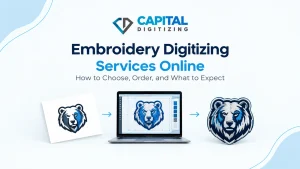
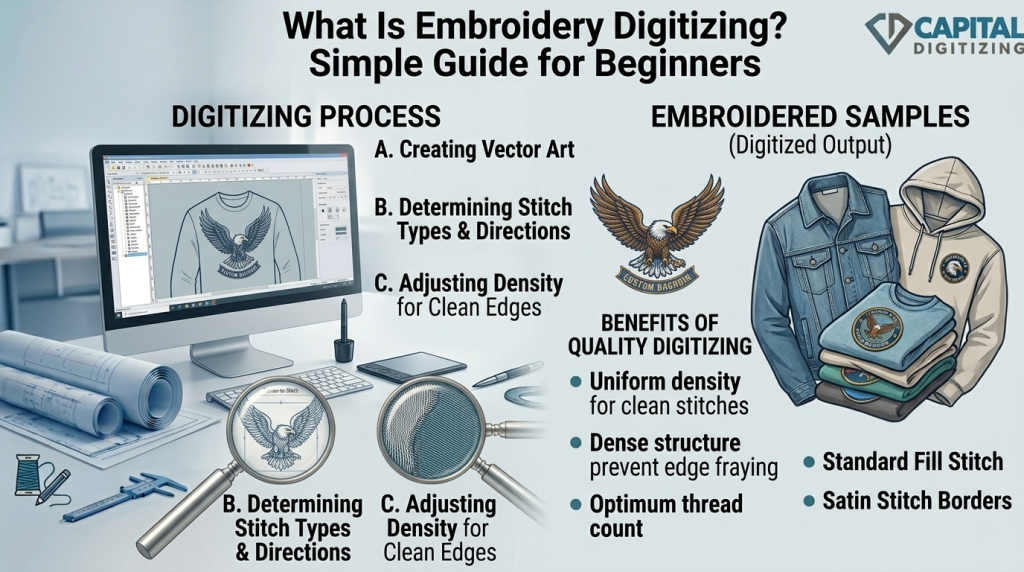
Embroidery digitizing is the process of turning a logo, image, or design into a file that an embroidery machine can understand. The machine cannot read normal pictures like JPG or PNG files, so the design must first be converted into stitch instructions.
Think of it like giving directions to the embroidery machine. The digitized file tells the machine:
- where to stitch,
- which thread to use,
- how thick the stitches should be,
- and in which direction the stitching should go.
Without embroidery digitizing, the machine cannot create clean embroidery.
Simple Example
Imagine you draw a logo on paper. A human can understand the drawing, but an embroidery machine cannot. The machine only understands commands and stitch patterns.
Embroidery digitizing changes your artwork into a special embroidery file so the machine knows exactly what to do.
Why Is Embroidery Digitizing Important?
Good embroidery digitizing helps create:
- clean stitching,
- smooth text,
- sharp logo details,
- and professional embroidery results.
Bad digitizing can cause:
- broken threads,
- messy stitching,
- uneven designs,
- and damaged fabric.
That is why professional embroidery digitizing services are very important for businesses and clothing brands.
How Does Embroidery Digitizing Work?
The process is simple when explained step by step.
1. Artwork Is Prepared
First, the logo or image is cleaned and adjusted for embroidery.
2. Stitches Are Planned
The digitizer decides:
- where stitches start,
- where they stop,
- and which stitch type fits the design best.
3. File Is Created
The design is saved into embroidery file formats like:
- DST,
- PES,
- EXP,
- or JEF.
These files are used by embroidery machines.
Common Stitch Types
Different designs need different stitches.
Satin Stitch
Used for:
- text,
- borders,
- and small shapes.
It gives embroidery a smooth and shiny look.
Fill Stitch
Used for large areas of a design.
It fills empty spaces with thread.
Running Stitch
Used for outlines and small details.
What Can Be Digitized?
Almost any design can be digitized, including:
- business logos,
- cap designs,
- jacket embroidery,
- custom embroidered patch artwork,
- sports team names,
- and uniform designs.
Manual Digitizing vs Auto Digitizing
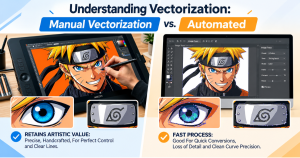
Auto Digitizing
Software creates stitches automatically.
It is fast but often gives poor results.
Manual Digitizing
A professional digitizer creates stitches by hand using embroidery software.
This gives:
- cleaner embroidery,
- better stitch quality,
- and fewer mistakes.
Professional embroidery digitizing companies usually prefer manual digitizing for high-quality results.
Who Uses Embroidery Digitizing?
Many industries use digitizing for embroidery, including:
- clothing brands,
- schools,
- sports teams,
- businesses,
- and custom patch companies.
It helps them create professional embroidery on:
- shirts
- hats
- jackets
- bags
- and uniforms.
Choosing the Right Embroidery Digitizing Service
When choosing an embroidery digitizing company, look for:
- good stitch quality,
- fast turnaround,
- experienced digitizers,
- and support for complex logo designs.
A good embroidery digitizing service saves time and improves embroidery quality.
Conclusion
Embroidery digitizing is the most important step in machine embroidery. It changes a normal image into a stitch file that embroidery machines can read easily. Good digitizing helps create clean, smooth, and professional embroidery on all types of garments and patches.
Whether you need logo embroidery, custom patches, or uniform designs, professional embroidery digitizing services help achieve better stitching results and long-lasting embroidery quality.
What is embroidery digitizing in simple words?
It is the process of converting a design into a stitch file for embroidery machines.
Why do embroidery machines need digitized files?
Because machines cannot understand normal image files directly.
Which file formats are used in embroidery digitizing?
Common formats include DST, PES, JEF, and EXP.
Can logos be digitized for embroidery?
Yes, logos are one of the most common designs used in embroidery digitizing.
Is manual digitizing better than auto digitizing?
Yes, manual digitizing usually gives cleaner and more professional embroidery results.