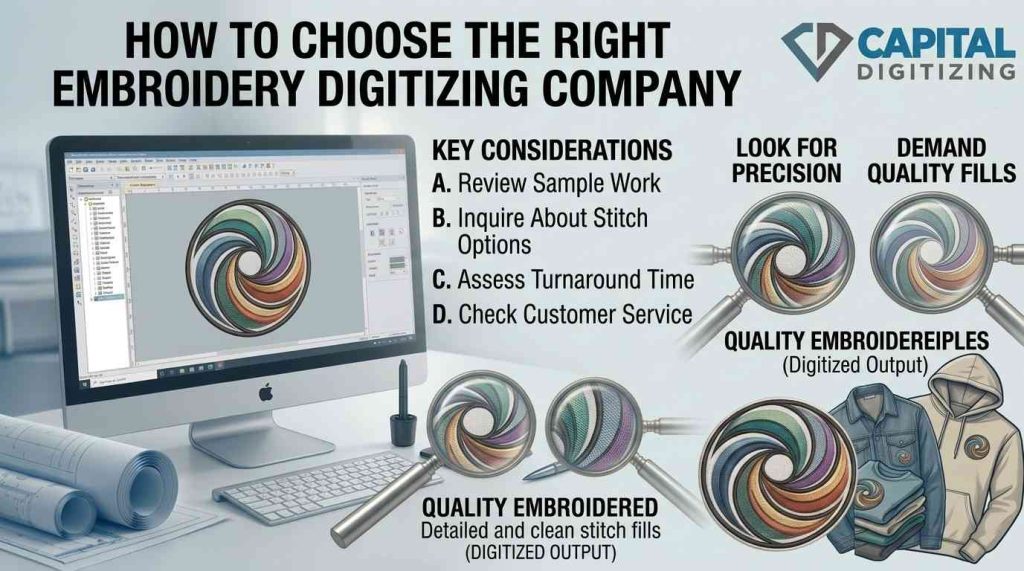
Running a clothing store, your reputation is extremely vulnerable. Choosing the wrong embroidery digitizing company may lead to ruined clothes, wastage of resources, and dissatisfied clients. High-quality embroidery requires good embroidery digitizing companies that will take into account the aesthetics of the design and its real manufacturability. The choice of the best embroidery digitizing company will guarantee that all your machine embroidery files operate properly at the production site, maintaining premium quality each time you order embroidery digitizing services for logos.
Why Choosing the Right Digitizing Company Matters
Automated tracing ruins apparel designs because software blindly copies lines instead of interpreting the actual stitch flow. When an inexperienced embroidery digitizing services provider provides poor technical paths, it creates serious operational issues:
- Wasted Resources: The wrong settings can destroy delicate fabrics, cause bird-nesting under the throat plate, and waste expensive threads.
- Hidden Shop Costs: Machine downtime and ruined garments directly eat into your business profit margins machine embroidery files.
- Hardware Friction: Commercial Embroidery Machines require different technical paths embroidery digitizing experts.
- Software Disparities: A premium partner uses advanced, industry-grade Digitizing Software like Wilcom or Pulse rather than free web tools to customize your designs.
5 Things Every Great Embroidery Digitizing Company Must Offer
To rank among the industry elite, the best embroidery digitizing company should be proficient and deliver great customer service. Discover how high-quality manual pathing elevates your brand with our dedicated custom embroidery digitizing solutions. Ensure that the embroidery digitizing company provides excellent embroidery digitizing services and has the following important features:
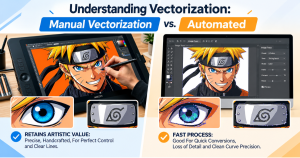
- Human Digitizers, Not Automated Bots: Skilled artists carefully create each path manually for accurate professional embroidery digitizing services for logos.
- True Multi-Format Output: Your supplier must native-export clean machine embroidery files matching your precise hardware requirements without losing critical color changes.
- Custom Stitch Density Calibration: They adjust your design paths dynamically according to individual Fabric Types so the needles don’t punch holes or sink out of sight.
- Unlimited File Revisions: A good vendor supports their work by making free adjustments until the design works well on your device.
- Quick Delivery: A best embroidery digitizing company ensures fast turnaround without quality loss.
File Formats: DST, PES & What Your Machine Needs
Your production hardware cannot read standard images or vector PDFs; it requires explicit, machine-readable machine embroidery files. Different hardware manufacturers use specialized languages to communicate needle drops, thread trims, and color changes. When ordering embroidery digitizing services, knowing your machine’s native language prevents formatting issues on the shop floor.
| Format | Common Machine Brands | Notes |
| DST | Tajima, Barudan, SWF, Melco | The universal commercial standard. Contains machine commands but skips specific color thread names. |
| PES | Brother, Baby Lock, Bernina | Popular for home and semi-commercial use. Keeps color palette definitions intact. |
| JEF | Janome | Brand-specific formatting built for Janome memory cards and direct USB transfers. |
| VP3 | Husqvarna Viking, Pfaff | An advanced layout style common across premium European home embroidery units. |
| EXP | Melco, Bernina | Non-trimmable commercial format used extensively for high-speed automated runs. |
Verify your hardware model first. Premium vendors save raw masters to export alternative file formats like DST or PES on demand. Capital Digitizing ships DST and PES versions together by default, covering both commercial and domestic setups seamlessly.
Stitch Density, Fabric Types & Why They Change Everything
A design digitized for a heavy canvas jacket will completely ruin a lightweight polyester performance polo. That is why embroidery digitizing experts never use a “one-size-fits-all” approach to design files. Balancing stitch density, fabric, and thread prevents puckering for flat embroidery results.
- High Density on Light Knits: The material will tear up because of the needle, leaving holes, loose threads, and puckers.
- Low Density on Thick Materials: The design will appear to be unbalanced and incomplete because we will be working on soft or fuzzy towels, and thus, the loops in the material will show through.
- Thread Variations: Different Needles (for instance, polyester is much harder than Rayon or wool, which stretches), which calls for special considerations.
- Material Mapping: Experienced embroidery digitizing experts radically change underlay and pull settings when moving from structured caps to knit piqué polos.
How to Spot Professional Embroidery Digitizing Services for Logos
You don’t have to wait for an embroidery machine breakdown to identify high-quality professional embroidery digitizing services for logos. Read our guide on 5 signs you need professional embroidery digitizing services to avoid costly mistakes. You can spot clean work right on your screen and during your initial test stitch-out by checking for clear technical milestones:
- Sharp Small Text: Look for clean, manual column stitches on small letters that remain highly legible without blending.
- Smart Stitch Flow: Stitch directions should naturally curve with the artwork shapes rather than running in simple, blocky directions.
- Solid Stabilization: Look for strategic underlay stitches laid down first to lock the fabric to your backing before the top satin details sew out.
- Smooth Production Runs: Watch for an absence of thread breaks or needle breaks during your test run, proving the Stitch Density is perfectly balanced.
Red Flags: What a Bad Digitizing Company Looks Like
Avoid vendors that slow down your production line and cost you extra money. Watch out for these operational warning signs:
- Single Format Delivery: They only send over one format file and refuse to provide options for other hardware styles.
- No Design Previews: They won’t show you a digital path preview before you pay or download the file.
- Auto-Conversion Software: The design looks pristine on screen, but it sews out with random path jumps, uneven fills, and constant thread breaks.
- Strict “No Fixes” Policy: They refuse to tweak files or charge extra for basic edits when a design doesn’t run right on your machine.
- Generic Intake Systems: They take your orders without asking about your machine type, backing choices, or target fabrics.
- Hidden Upcharges: They tack on extra fees for standard 24-hour delivery timelines that should be part of standard service.
Why Capital Digitizing Is the Best Choice for Your Business
When you partner with Capital Digitizing, you get a dedicated team focused on helping your shop run smoothly and maximize its profitability. We are the best embroidery digitizing company for commercial decorators because we completely skip automated software tools and focus on real production reliability:
- 100% Hand-Digitized Files: Every design is mapped out stitch-by-stitch by embroidery digitizing experts who understand physical machinery.
- Universal Format Support: Every order includes major formats like DST, PES, EXP, and JEF, so you can run them on any machine right away.
- Fabric-Specific Customization: We tailor your layouts for their exact target backing, from 3D puff foam caps to delicate silk shirts.
- Risk-free Production: We offer premier professional embroidery digitizing services for logos and will work as much as necessary in order for you to be fully satisfied with the sewing design.
- Quick Services: Get your ready-to-use files fast without any extra charge.
Conclusion
Choosing the proper company to assist you in digitizing your product is essential in making your embroidery production successful. This can be achieved through accurate fabric density adjustment, data input, and reliable services that avoid machine failures and ensure perfect clothing.
Capital Digitizing delivers 100% hand-crafted, fabric-specific embroidery files to guarantee flawless production and zero machine downtime.
1. How much does an embroidery digitizing company charge?
Most companies charge flat rates between $10 to $40 based on design stitch counts.
2. Can a digitizing company handle complex logo designs?
Yes, professional human digitizers simplify complex gradients, fine text, and highly detailed artwork manually.
3. How do I choose the best embroidery digitizing company?
Look for a provider offering manual digitizing, fabric-specific testing, and quick delivery turnarounds.
4. Should I choose a local or online embroidery digitizing company?
Online companies are best because they offer faster turnaround times and competitive global pricing.
5. What makes a professional embroidery digitizing company reliable?
Reliability means delivering multi-format, production-ready files with unlimited free revisions for zero downtime.