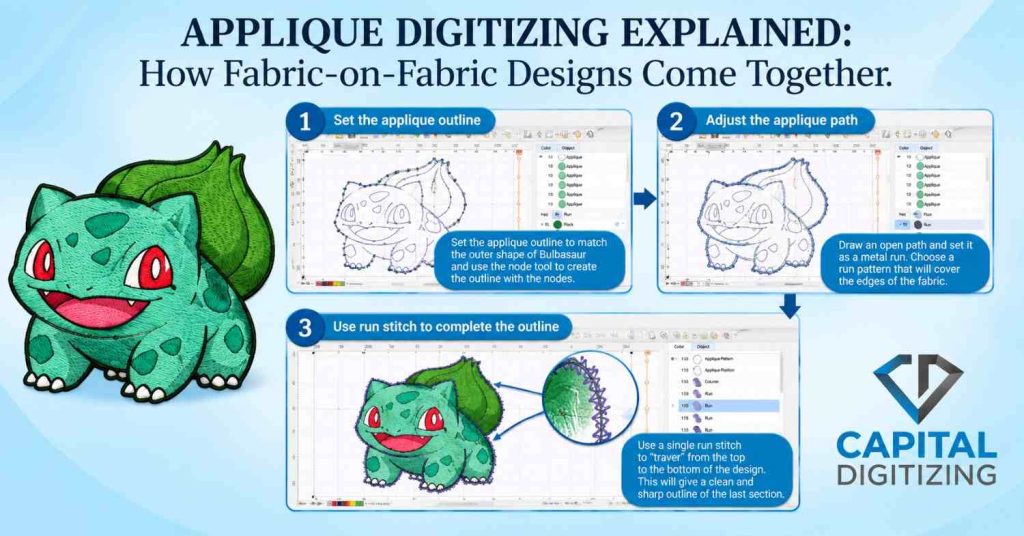
Applique Digitizing is the process of using both fabric and embroidery, thus decreasing stitches and saving time on large designs. Using the best embroidery digitizing service means that instead of the tight threads of embroidery, the machine draws a border, holds it down, and satin stitches pieces of fabric into place. This allows for decreased production time, increased flexibility of the garments, and an overall impressive effect.
What Is Applique Digitizing?
Applique digitization involves an advanced programming process wherein physical elements are directly sewn onto the garment itself. Rather than packing thousands of stitch entries into one block of color, the sewing machine traces a perimeter, holds down a fabric patch, and finishes the border.
- The fabric supplies the primary visual color and texture.
- The stitching merely secures, anchors, and cleans up the raw edges.
- It creates a striking contrast against standard solid-fill embroidery, which relies entirely on dense thread arrays.
This method is the best way to create varsity letters, big jacket designs, and large company logos. If you have ever wondered how custom embroidered patches are made, applique serves as the structural backbone for many dimensional emblems.
Why Applique Cuts Stitch Count on Large Designs
Partnering with the best embroidery digitizing service means saving valuable time and machine wear on every single run. When commercial production is executed correctly, manufacturing efficiency skyrockets.
- The Numbers: A 6-inch solid-filled letter easily runs roughly 20,000 stitches, taking around twenty minutes of constant machine time.
- The Applique Shift: That same shape utilizing applique digitizing runs closer to 3,000 stitches, about a sixth of the total run time.
- Wearer Comfort: Because there is no dense brick of thread sitting against the chest, the garment stays remarkably softer and more breathable where the design sits.
Get a Free Applique Digitizing Quote →
The 4-Step Applique Sequence Explained
Understanding applique embroidery digitizing requires looking at how the machine and operator interact on the floor. It is a precise, multi-stage choreography:
- Placement stitch: The machine lays down a simple running outline on the garment to show the operator exactly where the fabric piece needs to go.
- Fabric lay-down: The machine stops; the worker puts a piece of fabric over the marked outline.
- Tack-down stitch: A second running stitch holds the fabric tightly so that the worker can cut off any extra fabric cleanly along the line.
- Satin border: A wide strip of satin, about 2mm to 3mm wide, is used to fully cover the untrimmed part and mask any mistakes during trimming.
Tip: When you’re working on large-volume orders, pre-cut or laser-cut pieces don’t require any trimming and have razor-sharp edges. For more insights on material choices, review best materials for patch embroidery.
Fabric Placement & Tack-Down Stitching: Why It’s the Trickiest Step
Manual trimming is rarely surgical, meaning a digital file has to account for the real world. A great custom embroidery digitizing file builds in vital tolerances so that human hands working at high speeds do not ruin the piece.
- Forgiving Outlines: The tack-down line must allow for slight variations in hand-cut edges without letting loose threads escape.
- Satin Coverage: The surrounding satin border width has to be wide enough to reliably swallow stray fibers.
- Pull Compensation: The fabric layer behaves entirely differently from the knit or woven garment underneath, requiring custom density and pull settings.
- Pause Management: Consolidating color stops is crucial because every machine stop represents an operator pause to place and trim fabric.
What a Good Applique Digitizing File Gets Right
An experienced embroidery digitizing company separates itself from generic software auto-tracers by building files optimized for production realities.
- Realistic Borders: Border sizes are adjusted to match what can be easily cut by hand.
- Simplified Shapes: The designs have smooth, rounded shapes because fabric can’t keep very tiny details or sharp points.
- Sensible Sequencing: Stop-and-place cycles are organized logically to keep operators moving quickly.
- Material Adjustments: Custom compensation settings are applied depending on whether you use stiff twill, soft felt, or heavy leather.
This foundational expertise is precisely why partnering with a specialized applique embroidery digitizing service protects your bottom line on large runs.
Best Fabrics for Applique Embroidery
Picking the right fabric decides if your clothes last through many washes or get ruined after the first one.
- Twill: The common choice in the industry. It is strong, very tough, and creates very clean cut edges.
- Felt: Has a traditional, softer look like a varsity jacket and won’t tear at the edges.
- Leather & Vinyl: Delivers a premium, upscale appearance, but they need special needles and gentle care when working with them.
- Knits: This is the most difficult choice because they stretch a lot when attached and need strong support behind them.
Washing Tips: Make sure the fabric used for the design and the main garment shrink at about the same rate. If they don’t, the design may wrinkle after the first wash.
When to Choose Applique vs Solid Fill: Ask the Best Embroidery Digitizing Service
When planning embroidery digitizing for businesses, picking the right construction method determines your production costs and visual appeal.
| Factor | Applique | Solid Fill |
| Best design size | Large (varsity letters, jacket backs, bold logos) | Small to medium |
| Approx. stitch count (6″ letter) | ~3,000 | ~20,000 |
| Detail handling | Bold, rounded shapes only | Fine detail possible |
| Operator involvement | Higher (placement + trim) | Lower (unattended run) |
| Texture options | Twill, felt, leather, patterned fabric | Thread color only |
| Best for | Team apparel, uniforms, outerwear | Small logos, text, detailed art |
For small text or intricate artwork, solid fill remains the right call because fabric simply cannot hold fine micro-details.
Why Work With A Dedicated Embroidery Digitizing Company
Applique files require a level of fabric-specific judgment that generic auto-digitizing software cannot provide. Businesses ordering apparel in bulk save the most money when stitch counts and stop sequencing are optimized upfront, preventing costly production delays and wasted garments.
A trusted embroidery digitizing service ensures that every digital file goes through rigorous testing before production, providing clear proof reviews to guarantee your manufacturing run goes off without a hitch.
Upload Your Design for a Free Quote →
Conclusion
Expert applique digitizing skills change thick and labor-intensive embroidery into efficient and affordable clothing. The effective use of materials in combination with precise stitching significantly decreases the production period and ensures maximum comfort for the wearers. Ready to optimize your next big apparel run? Upload your design today for an expert, risk-free quote.
Capital Digitizing masters applique digitizing to slash stitch counts, cut production time, and maximize bulk apparel profits.
FAQs
1. What is applique digitizing?
Applique digitizing is programming an embroidery machine to outline, secure, and border physical fabric patches instead of using dense thread blocks.
2. How is applique different from standard embroidery digitizing?
Standard embroidery packs thousands of stitches into solid color blocks, whereas applique uses actual fabric for color and texture, using stitches only to anchor and finish edges.
3. What fabrics work best for applique designs?
Twill, felt, leather, vinyl, and stable knits work best, provided they shrink at a similar rate to the base garment.
4. Does applique digitizing cost more than regular digitizing?
Yes, because each layer requires precise programming for placement, tack-down, and cover stitches.
5. Can applique be combined with regular embroidery in one design?
Yes, applique handles large background sections or bold letters, while regular embroidery fills in smaller details and text.
6. How durable are applique patches/designs over time?
Extremely durable when digitized with correct pull compensation and satin borders wide enough to completely seal raw edges.