Embroidery is changing quickly. Production delays that happened when turning artwork into files for stitching are going away. Today, AI embroidery digitizing services help to automate boring tasks, so creators can put more effort into making quality designs. By using artificial intelligence, Capital Digitizing helps the industry meet branding needs faster and makes high-quality files easier for everyone to access.
Why the Embroidery Digitizing Industry Is Turning to AI
The process of automation is being prompted because of the need for efficiency. When orders increase in number, traditional processes may fail to cope without experiencing burnout and delays.
- Scalability: With the help of automation, shops will be able to manage massive spikes in orders without needing an army of digitizers.
- Speed: In a market that demands rapid turnaround, embroidery digitizing technology provides the means to produce initial stitch files in a matter of minutes.
- Consistency: Through the use of AI technology, consistency in stitch logic can be assured.
- Quality Assurance: At Capital Digitizing, we have automated quality control systems in place that detect problems such as excess density and poor sequences before a single needle touches the fabric.
How AI Embroidery Digitizing Services Actually Work
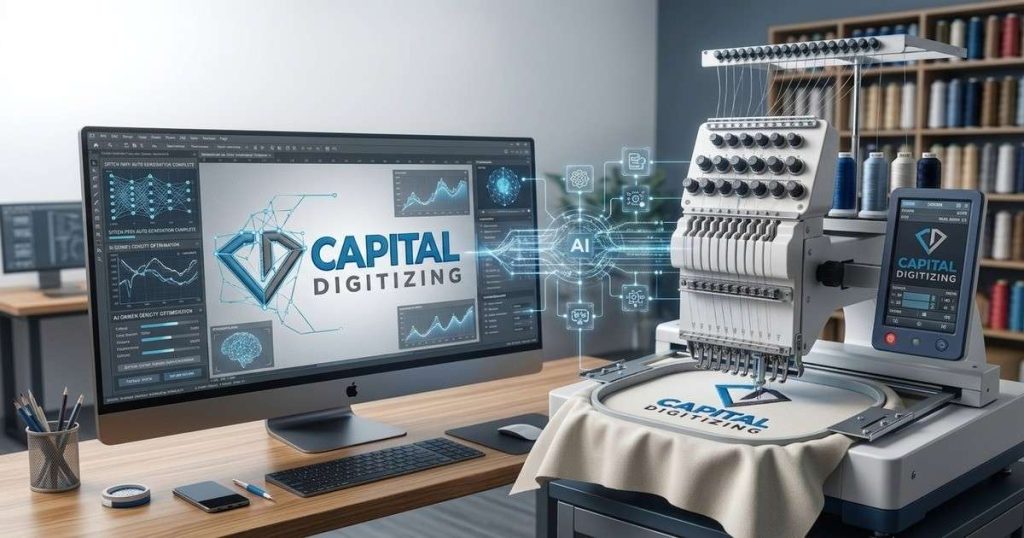
Modern digitizing software shifts the focus from artistic guesswork to data-driven precision.
- Analysis: The software scans uploaded artwork to identify shapes, colors, and edges.
- Mapping: The system uses artificial intelligence to recommend the best types of stitches to use, like satin stitches for borders or fill stitches for bigger areas.
- Optimization: The AI finds the best route for the machine to take, reducing thread cuts and stress on the machine.
- Human Refinement: The AI creates a good “first draft”, which a skilled person then checks and makes changes to things like fabric stretch, pulling issues, and what the customer wants.
Machine Learning and Smarter Stitch Mapping
The “brain” behind this transformation is machine learning. By training on thousands of previous designs and production results, these systems learn how specific artwork translates into physical stitches.
- Pattern Recognition: The software detects common features like small text or shades and automatically adjusts the stitch density needed to stop any puckering.
- Adaptive Learning: As time goes on, the technology learns the common mistakes that human digitizers make. This helps it automatically suggest the right fixes that experts would use.
- Fabric Intelligence: Newer systems are starting to learn how various fabrics, like fleece, hats, or thin nylon, respond when needles go through them. This helps reduce mistakes when working with difficult materials.
AI vs Traditional Embroidery Digitizing Software
| Factor | Traditional Manual Digitizing | AI-Assisted Digitizing |
| Turnaround Time | Several hours per design | Minutes for the first draft |
| Consistency | Depends on individual experience | Standardized stitch logic |
| Error Rate on Complex Art | Higher on fine detail | Lower with pattern recognition |
| Human Review Needed | Full manual build | Final quality pass only |
| Best Suited For | Highly custom, artistic work | High-volume, repeatable orders |
Where AI Still Needs a Human Digitizer
AI is a strong tool, but it can’t fully take the place of human skills. Artificial Intelligence has a hard time understanding how thread works with fabric when it’s being pulled tight in embroidery.
- Judgment Calls: AI can’t always know how a certain logo will look on a stretchy or textured piece of clothing.
- Creative Detail: Fancy logos or unusual designs often need a human touch to make them look good by changing their size and angle.
- Special Requests: Things like 3D puff embroidery, shiny threads, or complex custom designs still need an expert to help.
- The Verdict: AI helps write faster, but people still make it better.
Custom Embroidery Digitizing Services: What AI Changes for Customers
For clients, the primary benefits of modern custom embroidery digitizing services driven by advancements in AI are increased flexibility and unmatched speed.
- Faster Quotes: As the files are created instantly, we can offer instant quotes and previews to you.
- Easy Revisions: If the design needs any small modifications like color changes and size adjustments, then the AI system will generate the file again within seconds.
- Uniform Branding: Clients ordering bulk batches benefit from consistent stitch files across every piece of apparel.
The Future of Embroidery Digitizing Company Workflows
The future will use a mix of different methods. The shops that do the best will be the ones that use Machine Learning to do most of the hard work, while having skilled designers in charge. As a leading embroidery digitizing company, we believe the industry will focus on three key areas:
- Software Integration: We want better links between design programs and embroidery machines.
- Advanced Recommendations: Future tools will likely suggest thread colors and fabric-specific settings before the digitizing even begins.
- Expert Solutions: Whether you need a complex logo or a simple design, our embroidery digitizing services provide the precision and professional touch required for top-tier results.
- Enhanced Precision: As models evolve, the need for manual fine-tuning will continue to decrease for standard logos.
See Capital Digitizing’s Process →
Conclusion
AI is changing the industry by making production problems easier and faster to solve. By utilizing quick automation and the special abilities of humans, companies can achieve faster and better success. Try out these modern techniques, and let Capital Digitizing use them to perfect your embroidery work.
Capital Digitizing leverages cutting-edge AI and expert craftsmanship to deliver faster, consistent, and superior-quality custom embroidery designs.
FAQs
1. What is AI embroidery digitizing?
Using software to automate the conversion of artwork into machine-readable embroidery stitch files.
2. How is AI improving embroidery digitizing technology?
It significantly increases production speed, ensures consistent stitch quality, and minimizes manual error rates.
3. Can AI replace professional embroidery digitizing services?
No, AI handles initial drafts, but human experts remain essential for complex, speciality, and fabric-specific adjustments.
4. How does Machine Learning help embroidery digitizing software?
It recognizes patterns from thousands of designs to predict optimal stitch density and pathing automatically.
5. Should businesses choose an AI-powered embroidery digitizing company?
Yes, as they offer faster turnarounds, reliable consistency, and more efficient production workflows for bulk orders.
6. Can AI be used for custom embroidery digitizing services?
Absolutely, it streamlines the creation of custom files, allowing for rapid revisions and quicker quoting.