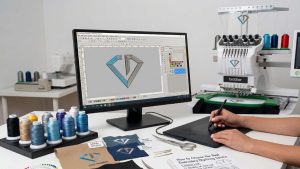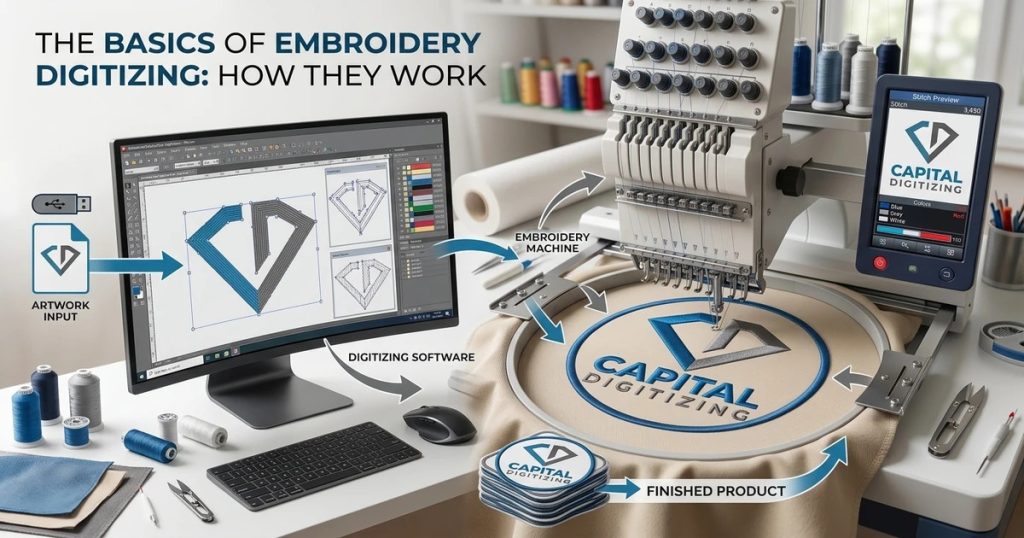
Embroidery digitizing is the process that turns flat digital images into designs for embroidered clothing. Many companies use embroidery digitizing services in the USA to make sure their logos look clear, professional, and steady. Having a basic understanding of how the process works can greatly enhance your quality of production.
What Are Embroidery Digitizing Services?
Embroidery digitization is the process through which a two-dimensional image is transformed into digital commands to be understood by an embroidery machine. Although many people think it is as simple as a click of a button, professional embroidery digitizing needs great precision.
- Stitch Logic: Digitizing involves mapping out stitch types, density, and sequencing.
- Precision: Unlike printing, we have to consider how fabric stretches and how tight the thread is to avoid wrinkles.
- Expertise: Capital Digitizing has worked with over 800 clients, providing top-quality custom embroidery digitizing services.
How Embroidery Digitizing Services Work, Step by Step
Many business owners want to know how professional embroidery digitizing services operate. When you work with skilled experts, the process is set up to help you save time and avoid mistakes in production.
Step 1: Design Upload
Send us your artwork in different usual formats. Our team immediately reviews the file to ensure the design is ready for high-quality thread conversion.
Step 2: Stitch Mapping
A technician carefully selects the best stitch types and paths. This strategic mapping ensures every element of your design is perfectly aligned for production.
Step 3: Optimization
We adjust the stitch density and underlay settings for your particular fabric. This important step stops usual problems like fabric bunching up, getting out of shape, or the thread breaking.
Step 4: Conversion
The final design is changed into the specific format needed for your machine. This ensures your equipment receives accurate data to run without any errors.
Step 5: Proofing
You receive a detailed digital preview to approve before final delivery. This final check ensures the design meets your exact expectations before production starts.
Embroidery Digitizing Software: What the Pros Use
High-quality results depend heavily on the software used. Hobbyists will use simple software, but professional embroidery digitizing software allows for precise control of each stitch.
- Wilcom: The industry leader for wide-ranging file support and professional precision.
- Hatch: A more accessible option preferred by many intermediate digitizers.
- Tajima DG16: Engineered to pair perfectly with heavy-duty commercial hardware.
- Professional Expertise: Software cannot replace a professional digitizer who knows the demands of fabrics.
Logo Digitizing for Embroidery: Why It’s Different
Logo digitizing for embroidery requires certain skills that are not required when digitizing regular clip art. This means that they will contain gradients or thin lines that are not suitable for creating an image from thread.
- Simplification: Our main goal is the simplification of color blocks; normally, we use only 3-4 colors.
- Stitch Strategy: Fine text requires satin stitches, while large areas need heavy fill stitches.
- Placement Specifics: Designs for the left chest or caps need to be adjusted carefully because of their shape.
Online Embroidery Digitizing Services vs. Doing It Yourself
Deciding whether to do it yourself or use online embroidery digitizing services relies on what matters most to you. Some stores decide to do digitizing themselves, but most find that hiring others to do it is quicker and cheaper.
- DIY Costs: Learning how to use the software, equipment, and sewing techniques requires a lot of money at the beginning.
- Outsourcing Benefits: You skip the learning curve entirely and receive professional files ready for production.
- Value-Add: Our custom embroidery services offer free changes and format changes.
Free Embroidery Digitizing Online: Worth the Risk?
It’s easy to want to use free embroidery digitizing online tools for small projects. But these “auto-digitizing” tools usually don’t let you control the thickness of the threads and the base layer.
- Common Failures: Users often face thread breaks, puckering, or gaps in fill stitches.
- Production Risks: These tools rarely handle complex designs well, often leading to costly garment reprints.
- The Better Path: To get high-quality products, it’s best to have a skilled service manually create your designs. This helps prevent problems.
What to Look for in an Embroidery Digitizing Company
You need to focus on quality and trustworthiness in choosing an embroidery digitizing company. A professional partner should act as an extension of your own production team.
- Turnaround: Always look for a standard 12–24-hour delivery window.
- Compatibility: Make sure they can give you the exact file types your machines need.
- Proofing: Ask for digital proofs before approving the design and obtaining the final file.
- Track Record: Choose companies with experience and a good portfolio.
Common Embroidery Machine Digital File Formats
Different machines speak different “languages.” A reliable service will always ensure your embroidery machine digital files are formatted for your specific hardware.
| Format | Common Machines | Notes |
| DST | Tajima & Commercial | The industry standard |
| PES | Brother/Babylock | Common for small businesses |
| EXP | Melco | Popular for mid-range setups |
| JEF | Janome | Home machine standard |
Conclusion
To get started on making quality products, you will need to know how to do basic embroidery digitizing. By working with an expert at Capital Digitizing, you will be sure that your embroidery products have good technical skills, last long, and look impressive. Do not leave your company’s reputation up to machines; seek professional digitizing services for guaranteed results.
Capital Digitizing delivers the technical precision and industry expertise required to turn your complex designs into flawless, production-ready embroidery.
FAQs
1. What are embroidery digitizing services?
The technical process of converting flat images into digital instructions for embroidery machines.
2. What file formats are used for embroidery machine digital files?
Common industry formats include DST, PES, EXP, and JEF, depending on your equipment.
3. Can I get custom embroidery digitizing services online?
Yes, professional services provide high-quality, manual digitizing tailored to your specific project needs.
4. Why should I choose an embroidery digitizing company instead of free embroidery digitizing online?
Professional services provide manual, precision-driven results that avoid common issues like thread breaks and puckering.
5. What is logo digitizing for embroidery?
A specialized process of adapting graphic logos into thread-ready formats for high-quality apparel.
6. Which embroidery digitizing software do professionals use?
Professionals typically rely on robust platforms like Wilcom, Hatch, or Tajima DG16.